If you are searching for electrical rewires and consumer unit replacement in North London, or fuse box replacement near me, you are usually not browsing casually. You are normally responding to a real issue: an old installation, recurring faults, a renovation, a landlord compliance requirement, or the simple fact that the property’s electrical system no longer matches modern demand. RE Electrical’s currently indexed site already targets rewiring, consumer unit replacement, fuse-box repairs, emergency electrical work, and commercial fuse-box upgrades, so this topic fits the existing service structure well and can support both residential and commercial enquiries.
For North London homeowners, landlords, shops, offices, and mixed-use properties, rewiring and consumer unit upgrades are not cosmetic improvements. They are safety, capacity, compliance, and reliability decisions. NICEIC explains that rewiring a property can remove outdated wiring, install modern wiring, replace the fuse box or consumer unit, and improve the system’s ability to handle modern electrical demand safely.
The key point is this: many electrical problems do not start with a dramatic failure. They often show up first as nuisance tripping, overloaded circuits, limited socket capacity, dated boards, or an EICR that flags the installation as unsatisfactory. For landlords in England, the legal baseline is clear: rented properties must meet electrical safety standards set out in BS 7671 and must be inspected and tested at least every five years by a qualified person, with a report usually issued as an EICR.
Electrical systems in older North London properties are often asked to do far more than they were originally designed for. Between electric showers, larger kitchen loads, home working setups, entertainment systems, security equipment, and extra appliances, the demand on circuits is higher than it used to be. NICEIC states that older properties may not be equipped to handle today’s power-hungry devices safely, and that a rewire gives the opportunity to upgrade electrical capacity and install a higher-capacity consumer unit if needed.
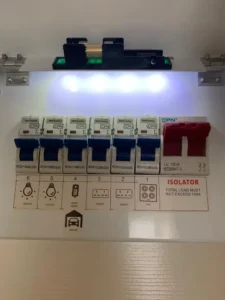
If your property still has an old-fashioned fuse box, NICEIC advises that it is recommended to replace it with a modern consumer unit because traditional fuse boxes do not offer the same level of protection and performance as modern boards with circuit breakers and RCD protection. Modern consumer units are designed to protect against electric shock and fire risks more effectively and are aligned with current wiring practice.
This is why high-intent searches such as consumer unit replacement North London, fuse box upgrade North London, rewire electrician North London, and commercial electrical rewire North London convert well. These are not vanity upgrades. They are usually triggered by safety concerns, legal obligations, renovation plans, or the need to future-proof a property.
A consumer unit replacement focuses on the distribution board itself: the place where power is split into circuits and where the main protective devices are located. NICEIC describes the consumer unit or fuse box as the central control hub for a property’s electrical system, containing the devices that help protect against electric shock and fire. Replacing the board is sometimes enough when the existing wiring is broadly serviceable, but the protection or layout is outdated.
A partial or full electrical rewire is broader. NICEIC says rewiring typically involves removing old wiring, installing new modern wiring, replacing the consumer unit, and, where required, updating sockets, switches, lighting points, and adding new circuits. In other words, a rewire deals with the underlying electrical infrastructure, not just the board at the end of it.
That distinction matters commercially. Some properties need only a consumer unit upgrade. Others need rewiring plus a new consumer unit. The right solution depends on the age, condition, testing results, loading demands, and future plans for the building.
One of the strongest lead drivers for rewiring work is uncertainty. Owners often know something is wrong but do not know whether it is a minor issue or a sign of a broader wiring problem. Electrical Safety First recommends periodic inspection at least every 10 years for owner-occupied homes, and notes that if a property is more than 30 years old and still has its original wiring, it is likely to need updating at least in part, including the fuse box.
Common warning signs include:
These are exactly the situations where searches like full house rewire North London, partial rewire North London, rewire before renovation, and electrical remedial works after EICR tend to appear.
A consumer unit may need replacement even where a full rewire is not immediately necessary. NICEIC explains that older fuse boxes were phased out in favour of modern consumer units with circuit breakers and RCD protection, and recommends upgrading old fuse boxes because they offer less safety and functionality.
Typical triggers for consumer unit replacement include:
For homeowners, rewiring and consumer unit replacement are often part of one of four scenarios.
The first is age-related upgrading. A property may simply be old enough that the installation no longer reflects modern standards or living patterns. Electrical Safety First says that original wiring in a property over 30 years old is likely to need updating at least in part.
The second is renovation and extension work. If you are opening walls, reconfiguring rooms, adding kitchen loads, fitting electric heating controls, or upgrading lighting, that is usually the right moment to review the wider installation rather than decorating over a weak electrical system. NICEIC notes that rewiring also provides the opportunity to install extra switches, sockets, and fittings and to increase capacity.
The third is property purchase or preparation for sale. Buyers do not want surprises after completion, and sellers do not want transactions slowed down by avoidable electrical issues. A modern consumer unit, recent certification, and a satisfactory EICR help create confidence.
The fourth is landlord compliance and rental preparation. For landlords in England, the installation must be inspected and tested at least every five years, and the outcome is typically recorded on an EICR. Electrical Safety First also notes that a copy of the EICR must be provided to new and retained tenants, and remedial or investigative work must be addressed within 28 days where required.
In practical terms, that means rewires and consumer unit upgrades are not only relevant to owner-occupiers. They are also crucial for rental property turnover, portfolio maintenance, and reducing the risk of last-minute compliance issues before a tenancy starts.
Commercial properties in North London have a slightly different profile, but the core drivers are similar: safety, capacity, reliability, and presentation. RE Electrical already has an indexed commercial fuse-box upgrade page, which means there is a clear opportunity to support that commercial service with educational blog content around rewires, board upgrades, and compliance-led improvements.
In offices and studios, the problem is often capacity and practicality. Legacy layouts may not suit workstation density, IT equipment, breakout areas, meeting rooms, or upgraded lighting. In shops and customer-facing premises, the challenge may be a mix of display lighting, point-of-sale equipment, refrigeration, signage, and staff areas. In hospitality spaces, poor or overloaded electrical infrastructure can affect everything from lighting design to kitchen support circuits and day-to-day operational reliability.
For these properties, high-intent commercial keywords include:
The value of the work is not just in passing inspection. It is in creating a safer, more dependable electrical backbone for a business that cannot afford avoidable downtime.
This is one of the strongest trust-building sections for conversion because many readers do not know what paperwork should follow electrical work.
NICEIC states that if a job involves a new consumer unit or distribution board, the client should receive an Electrical Installation Certificate (EIC). NICEIC also says that a Building Regulation Certificate of Compliance (Part P) is required for notifiable domestic work, including changes to a consumer unit, a full rewire, and the installation of new circuits.
That matters because many buyers, landlords, insurers, and property managers do not just want the work done. They want it done properly and evidenced correctly. If you are targeting high-intent searches such as Part P electrician North London, consumer unit certificate, rewire certificate, and Electrical Installation Certificate North London, this section helps qualify readers and position RE Electrical as a credible contractor.
For rental property owners, GOV.UK confirms that landlords must obtain a report, usually an EICR, from the person conducting the inspection and test, and that the installation must meet BS 7671 standards. The same guidance explains how C1, C2, C3, and FI outcomes are used to indicate urgency and whether remedial work is required.
An EICR is often the moment when dormant issues become commercial decisions. If the report identifies dangerous conditions, potentially dangerous issues, or further investigation, remedial works may be needed to make the installation satisfactory for continued use. GOV.UK notes that C1, C2, and FI outcomes all require action, while C3 is improvement recommended rather than mandatory remedial work.
This is why blog content on consumer unit replacement after failed EICR, rewire after EICR, and landlord remedial works North London can convert so well. The reader is often no longer in “research mode.” They are trying to solve a real compliance or safety problem quickly and correctly.
From a conversion standpoint, the biggest mistake in this topic is to treat rewires and consumer unit replacement as pure cost items. The better framing is value.
A proper rewire or board upgrade can:
NICEIC’s rewiring guidance makes the same strategic point: rewiring is not just about replacing old wiring; it is about making the property safer and better equipped for modern use.
For commercial readers, the value argument is similar. A sound installation reduces disruption, supports operational loads, and gives businesses more confidence when expanding or refitting the premises.
If you are dealing with an outdated installation, repeated faults, a failed EICR, a rental compliance issue, or a renovation that is exposing old electrics, electrical rewires and consumer unit replacement in North London should be treated as strategic property upgrades, not just reactive repairs.
For homeowners, the goal is a safer, more capable, future-ready home.
For landlords, the goal is safety compliance, reliable certification, and fewer tenancy problems.
For businesses, the goal is safe capacity, reduced disruption, and infrastructure that matches operational needs.
If your property in North London needs a rewire, a consumer unit replacement, or remedial work following an inspection, the next step is simple: arrange a professional assessment, get the right scope of work defined, and make sure the installation is upgraded safely, certified correctly, and built for current demand.
Do I always need a full rewire if I replace the consumer unit?
No. Some properties only need a consumer unit replacement, while others need rewiring as well. NICEIC explains that a rewire is broader and includes wiring replacement, while consumer unit work focuses on the distribution board and protective devices.
How often should a house be checked for rewiring needs?
Electrical Safety First recommends a periodic inspection at least every 10 years for owner-occupied dwellings, and notes that original wiring in older properties may need updating.
Do landlords in England need electrical inspections?
Yes. GOV.UK says rented properties must be inspected and tested at least every five years, and landlords must obtain a report, usually an EICR.
What certificate should I receive after a new consumer unit is installed?
NICEIC says work involving a new consumer unit or distribution board should be accompanied by an Electrical Installation Certificate, and notifiable domestic work also requires a Building Regulation Certificate of Compliance under Part P.
Should rewiring be treated as DIY?
No. NICEIC states that rewiring should only be carried out by a qualified, competent electrician and is not suitable for DIY.

Landlord EICR in North London: How to Meet BS 7671 and the 5-Year Electrical Safety Standard If you are a...